
Public Institutions Should Recognize Learning and Collaboration as Strategic Drivers for Development
There is no development without learning. When organizations remain trapped in their comfort zones and fail to respond to constant change and volatility, they risk becoming dysfunctional, obsolete, or even collapsing. The only sustainable way for organizations to survive, adapt, and develop is through continuous learning and collaboration.
The scale of this challenge is well documented. According to the World Economic Forum’s Future of Jobs Report 2025 [1], 39% of current skills will be transformed or become obsolete by 2030, while 63% of employers believe their workforce is not sufficiently adaptable to change. At the same time, the Global Risks Report 2025 [2] highlights that organizations investing in career development are 51% more likely to be leaders in AI adoption. Together, these findings reinforce a clear message: learning is no longer optional - it is a strategic necessity.
Learning and change are inseparable. Change is rarely comfortable; it demands effort, energy, and movement. Learning may involve acquiring new knowledge or skills, changing mindsets, improving decision-making, strengthening resilience, or fostering curiosity and openness to collective learning. When teams within an organization continuously learn and collaborate, the organization is better equipped to move forward. This leads to improved service delivery, more informed decision-making, increased innovation, stronger policy coherence, higher employee engagement and development, and greater organizational agility and resilience. Over time, the organization evolves into a learning organization.
The CEF’s perspective on the importance of becoming a learning organization has deepened significantly over the past several years. Through reflection and experience, we have seen how sustained investment in individual, team, and organizational learning directly supports resilience and adaptability. This learning journey has shaped how we support public institutions in South-East and East Europe in strengthening their institutional capacity and advancing their path toward becoming learning organizations.
“Public institutions today operate in an environment defined by complexity, uncertainty, and constant change. Trust in public institutions is under growing pressure. According to the OECD, only 39% of people across surveyed countries report high or moderately high trust in their national government, and this share has declined since 2021. Eurofound similarly notes a consistent downward trend in trust in EU national governments since 2020, driven in part by economic stress and financial insecurity. In this context, institutions that can learn, adapt, and innovate are those best positioned to deliver tangible and lasting impact.” [3]
This is why the CEF supports public institutions in systematically integrating knowledge and learning into their core functions — such as human resource management, budgeting and resource management, accountability, and transparency. Public institutions need skilled and capable people who can lead change, foster innovation, and effectively fulfill institutional missions—whether those missions relate to maintaining a stable financial system, implementing reforms, or advancing EU integration.
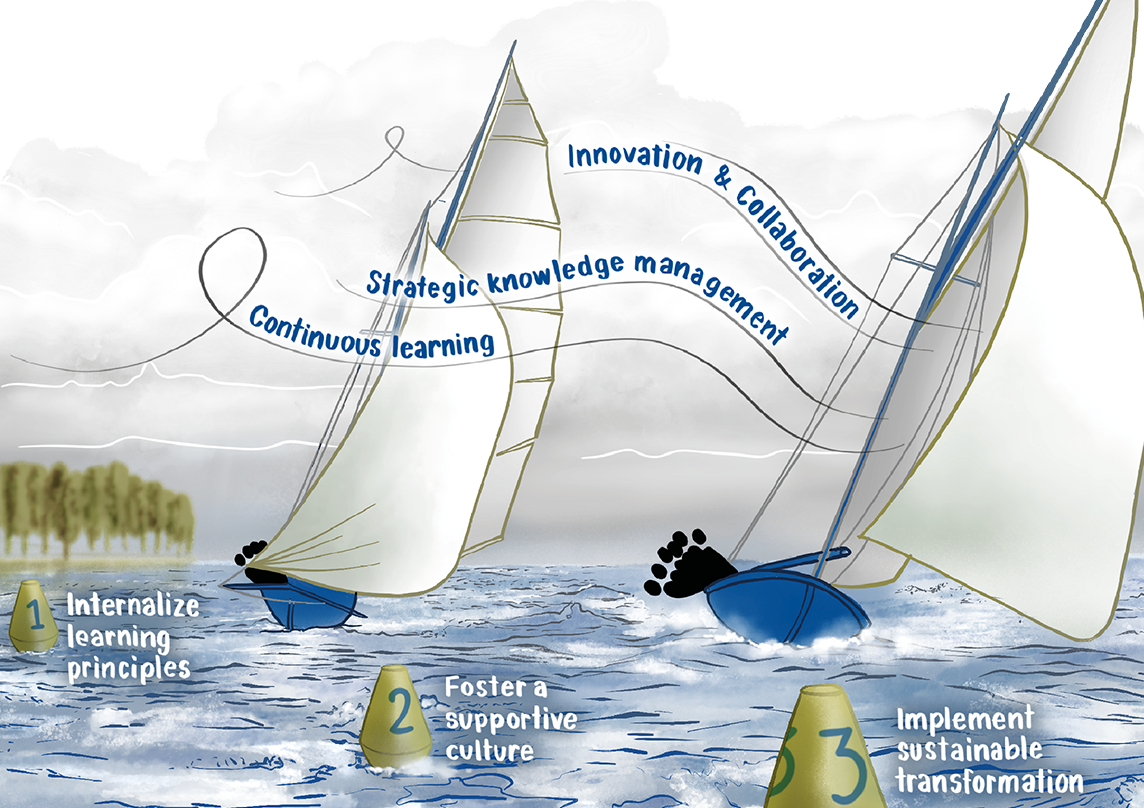
The CEF publication Systems for Resilience: Public Institutions as Learning Organizations (2025) provides a practical blueprint for how public institutions can become learning organizations capable of embracing complexity, uncertainty, and constant change. It offers a step-by-step guide to embedding learning and collaboration as strategic drivers of development. This is a publication that institutional leaders should engage with critically and reflect upon: How do they envision leading their teams and organizations forward? Will they invest in learning and contribute to sustainable development, or continue with business as usual and risk organizational decline?
As the Future of Jobs Report 2025 further emphasizes, the skills gap is widening, and institutions must act now to prepare their people for rapidly evolving workplace demands. Do we want to be among the 70% of employers who prioritize new and emerging skills in hiring? In a world where skills increasingly come first, learning is not optional - it is a strategic advantage. It attracts, retains, and empowers talent, enabling institutions and the people within them to thrive amid constant change.
References
[1] Future of Jobs Report. 2025. World Economic Forum
[2] Global Risks Report. 2025. World Economic Forum
[3] Systems for Resilience: Public Institutions as Learning Organizations. 2025. CEF