
When Reform Becomes the Way Institutions Work: Part I
What does success look like in a project supporting reform processes? A completed report? A well-attended workshop? A reform strategy adopted on time? A high rate of funds absorption? These are important achievements. But after working closely with Montenegro's public institutions on public administration reform (PAR) and public financial management (PFM), I have come to believe that the most meaningful measure of success is something less visible: what happens when institutions no longer need us to do the work with them?
Can they convene the right people, navigate disagreements, interpret evidence, prepare credible reports, and make informed decisions? Can they maintain reform momentum when priorities shift, staff change, or external support comes to an end?
These questions have increasingly shaped our work at the CEF through the EU-funded project supporting the coordination, monitoring, and reporting of Montenegro's PAR Strategy and PFM Reform Program.
And they have led us toward an approach to technical assistance that I believe deserves wider attention.
Reform does not happen in a workshop
When we started in 2023, the challenge was not a lack of strategies, institutions, or reform commitments. Montenegro already had established frameworks and ambitious objectives, reinforced by its EU accession process. The more difficult question was how to make the many moving parts of reform work together.
Public administration and public financial management reforms cut across ministries, agencies, coordination bodies, and levels of government. Their implementation depends not only on technical knowledge but also on relationships, communication, institutional memory, and the ability to translate commitments into coordinated action.
We therefore made a deliberate choice: rather than developing a parallel program of standalone training activities, we would connect our support directly to the responsibilities and working processes of the institutions themselves.
If a ministry needed to prepare an annual reform report, that became an opportunity to strengthen analytical and reporting skills. If coordination structures needed to function more effectively, we worked with the teams responsible for organizing and facilitating them. If officials were preparing for policy dialogue with the European Commission, we linked technical preparation with communication, collaboration, leadership development, and visibility.
In other words, the reform process itself became our learning environment.
This distinction may sound simple, but it transforms the relationship between a project and its beneficiaries by building a partnership between them. Learning is no longer something that happens separately from work. It becomes part of how work is done.
What makes this approach particularly valuable is that capacity development is embedded in real reform responsibilities, rather than organized as a parallel process. Institutions do not simply participate in learning activities; they apply new knowledge directly to the challenges they are responsible for addressing.
From delivering activities to changing institutional habits
Over time, we began to see a shift, increasingly driven by the institutions themselves.
In the early stages, considerable attention was devoted to strengthening coordination arrangements, establishing common ways of working, and developing the technical capacities of reform teams. As the project progressed, our counterparts became increasingly involved in shaping and leading activities themselves.
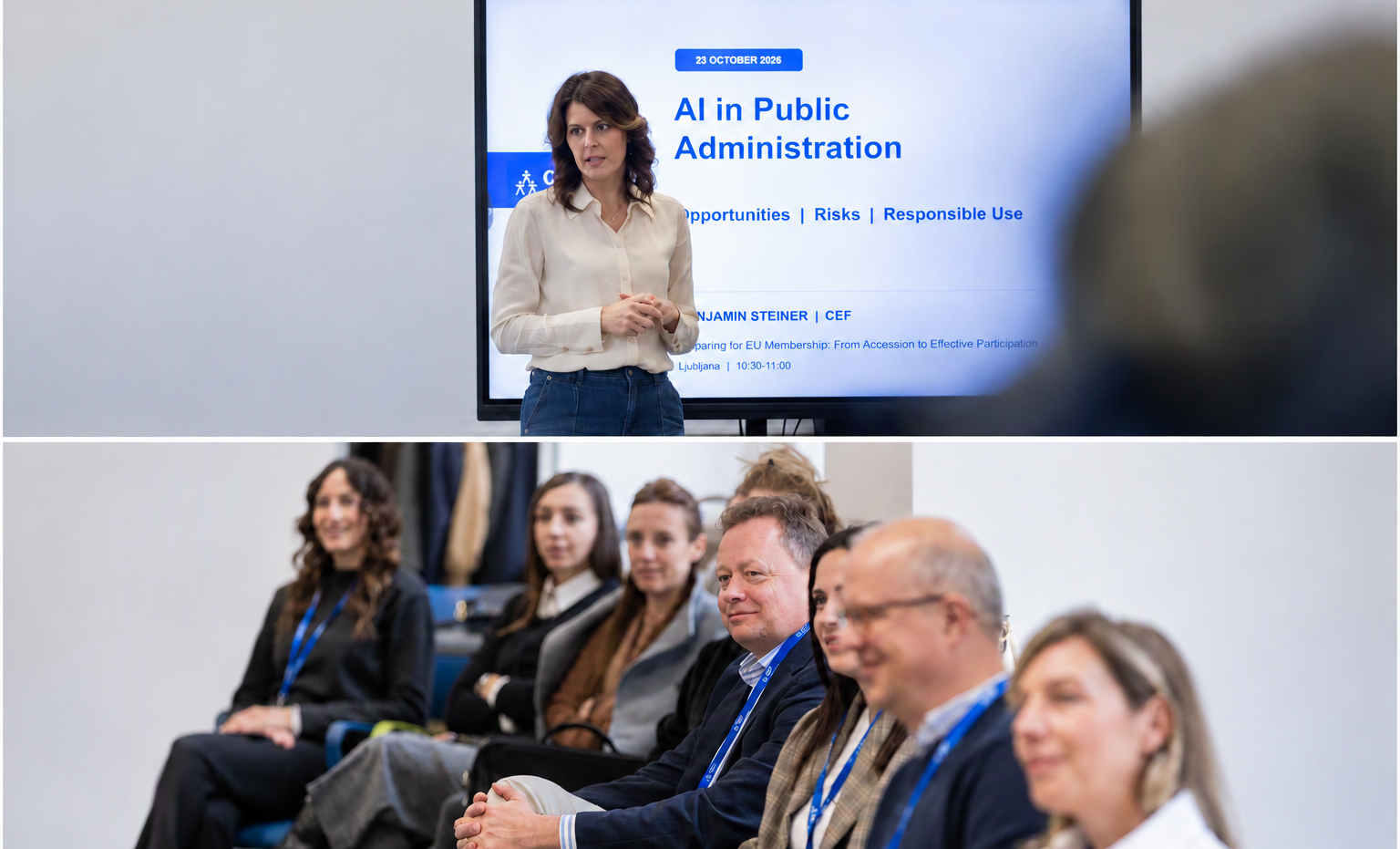
The preparation of the 2025-2026 PAR and PFM action plans offered an important opportunity to apply planning methodologies to real institutional tasks. Work on annual reporting moved beyond describing completed activities toward analyzing results and obstacles, improving indicators, and communicating progress more meaningfully. Practical mentoring on Excel, data visualization, and reporting tools helped officials work directly with the information they were responsible for producing.
Importantly, this support was not limited to improving individual documents. It aimed to strengthen the ability of coordination teams to manage subsequent planning and reporting cycles with increasing independence. In this way, activities that initially required substantial external facilitation gradually became processes more actively led by the institutions themselves.
At the same time, support for reform coordination and policy dialogue helped teams strengthen the skills needed to bring institutions together, manage discussions, and follow up on commitments. One particularly encouraging development was the growing initiative taken by partner institutions in organizing coordination processes, engaging development partners, and leading reporting exercises. This is where the value of capacity development becomes more tangible. The achievement is not simply that officials have learned a new technique. It is that the technique begins to influence how their institution operates because the people who learned the new technique make it their own, and develop it further.
A better meeting becomes a more effective coordination process. A stronger report becomes a tool for informed decision-making. An individual skill becomes a shared institutional practice. And gradually, the role of external support changes – from leading the process to enabling others to lead it.
The unusual value of being a connector
Another distinctive feature of our Montenegro experience has been the project's role within a much broader reform-support environment. Public administration and public financial management reforms attract substantial attention from the European Union, international financial institutions, and other development partners. Each brings valuable expertise, resources, and approaches.
Yet multiple interventions do not automatically produce a coherent reform effort.
Institutions may face overlapping demands, competing schedules, and different methodologies. Valuable knowledge can remain confined to individual projects, while coordination teams carry the responsibility of connecting it all.
We have therefore increasingly viewed our role not only as a provider of learning and expertise, but also as a connector.
Working alongside national institutions and partners such as OECD/SIGMA, the IMF, the UN, ReSPA, and other initiatives, we have sought to identify complementarities, encourage joint learning, and link technical support to the priorities of the institutions managing the reforms.
This coordinating role extends beyond avoiding duplication. By connecting institutions, reform processes, and development partners, the project helps create a more coherent environment in which different forms of technical assistance can contribute to shared national reform priorities. Rather than operating as another separate intervention, this project seeks to strengthen the connections between existing efforts.
This requires a different mindset. The question is not how much a single project can deliver, but how effectively it can help different contributions reinforce one another.
For a relatively focused intervention, this creates an opportunity to generate value beyond its immediate activities.
The blog is build on reflections from Montenegro on building institutions that can lead their own reforms
Mark Dec 8 to read Part II of this blog.