
Part II: From Cultural Change to Democratic Value
In the first part of this article, I argued that impact-oriented management rarely fails because of technical shortcomings. Instead, it falters when it is reduced to a reporting exercise, over-bureaucratized, or delegated away from leadership responsibility. Overcoming these patterns requires a shift in how impact-oriented management is understood and practiced.
Why Does Leadership Make a Difference?
Across different institutional contexts, one factor consistently proves decisive: leadership. Impact-oriented management challenges established routines, priorities, and ways of thinking. It requires organizations to reflect on their purpose, to prioritize explicitly and to accept uncertainty and learning as part of steering. Leaders act as translators between political goals and organizational practice. They signal what matters by what they ask, reward and prioritize. When impact objectives are embedded in strategic discussions and reviews, they gain relevance. When leaders use impact information to reflect on success and failure, they legitimize learning and adaptation. Crucially, leadership commitment must be sustained over time. Impact-oriented management is not a reform that delivers immediate results. It is a long-term development process that requires patience, consistency, and the willingness to adjust the course.
Impact-Oriented Management as a Governance Instrument
Beyond its organizational effects, impact-oriented management has broader relevance for democratic governance. Explicitly linking political objectives to intended societal outcomes, it creates a shared reference point for parliamentary debate and supports more evidence-informed political deliberation.
Within government, impact-oriented management helps address a central challenge of modern governance: complexity. Citizens’ realities do not follow ministerial boundaries. Issues such as social justice, climate change or labor market inclusion cut across multiple policy fields. By defining shared impact objectives and making interdependencies visible, impact-oriented management supports coordinated action, particularly when dealing with “wicked problems” that resist linear solutions.
At the administrative level, it can improve internal steering and motivation by clarifying responsibilities and linking everyday work to broader societal goals. This outcome-oriented perspective also creates space for innovation, as it encourages organizations to question established routines and explore new approaches.
The Data Dilemma
A central and often underestimated challenge of impact-oriented management lies in the availability and quality of data. Unlike financial information, impact data is rarely straightforward, easily attributable, or fully controllable. Especially for complex societal challenges, identifying indicators that genuinely allow conclusions about impact is inherently difficult.
This creates a structural dilemma at the heart of impact-oriented management: it is expected to improve effectiveness and accountability, while the benefits of the system itself are difficult to quantify or express in monetary terms. Building meaningful data infrastructures requires specialized competencies, sustained effort and significant resources; investments whose value is not immediately visible in traditional budgetary logic. In times of fiscal constraint, this dilemma becomes particularly acute.
Emerging technologies, including AI-based applications, can support indicator development, data aggregation, and pattern recognition. However, technology cannot resolve fundamental uncertainties or replace judgment. It can support decision-making, but it cannot substitute the cultural, organizational, and leadership foundations on which impact-oriented management ultimately depends.
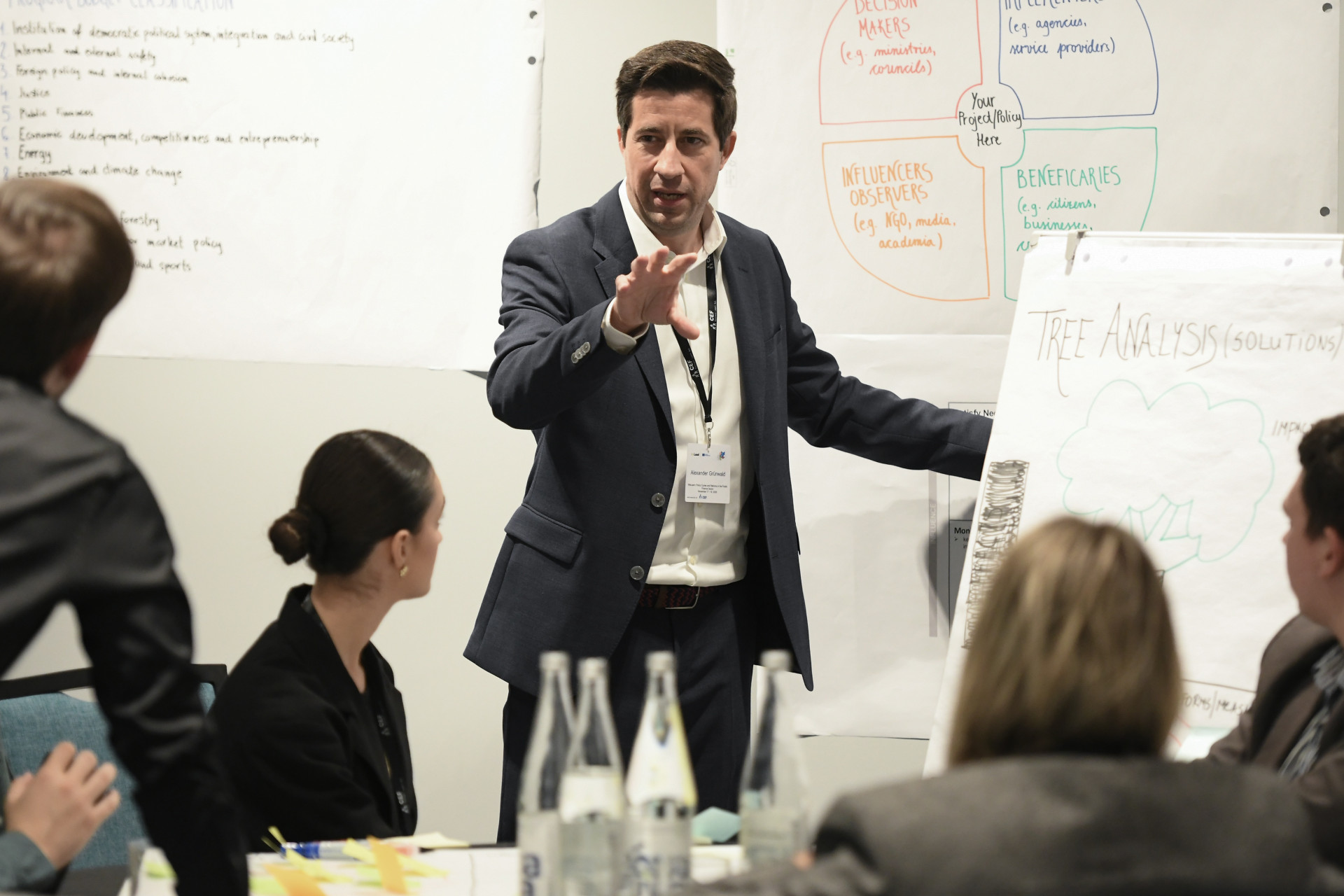
What Has Proven Essential in Practice
Based on my experience, a few practical principles consistently distinguish symbolic adoption from meaningful implementation.
Leadership must treat impact-oriented management as a steering instrument, not merely as a reporting obligation. Formal processes need to be complemented by communication and learning spaces. Expectations regarding data and indicators must be realistic, acknowledging uncertainty and limitations. Finally, impact-oriented management benefits from being embedded in a broader reform narrative that connects it to innovation, participation, and quality development.
Taking Impact Seriously in A Democratic Context
After more than a decade of working with impact-oriented management, I remain convinced of its potential, while being cautious about overpromising quick results. Introducing new instruments without questioning existing practices leads to symbolic reforms and organizational overload. Taking impact seriously requires difficult choices: simplifying where complexity adds no value, abandoning parallel logics that dilute responsibility, and investing in leadership and organizational learning. Impact-oriented management must be understood and led as a long-term governance reform.
Seen from this perspective, its relevance goes far beyond internal management. Impact-oriented management helps reconnect political goals, administrative action, and societal outcomes. It supports evidence-informed policymaking, helps governments address complex cross-cutting challenges, and strengthens transparency and accountability.
Most importantly, it enables a more meaningful dialogue with society. Making goals, responsibilities, and impact chains visible, it allows citizens and organized civil society to better understand how public decisions are made and how they contribute to collective outcomes. This transparency is a precondition for participation, trust, and democratic legitimacy.
In times when democratic systems are increasingly challenged, this contribution should not be underestimated. Impact-oriented management will not save democracy on its own. But when taken seriously as a cultural change supported by leadership, learning and honest use of evidence, it can help make democratic governance more comprehensible, more responsive and ultimately more resilient.